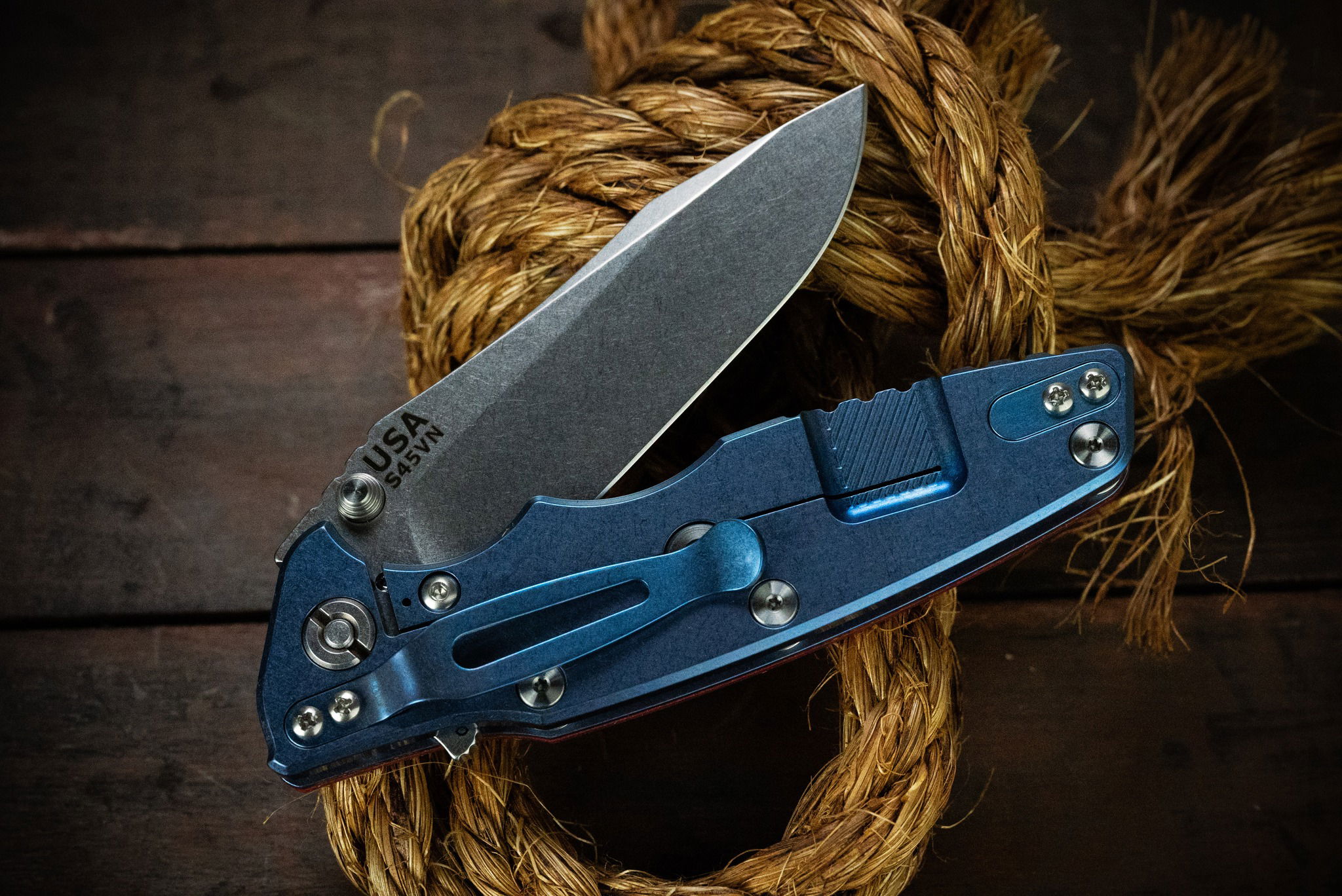
From Spear to Pocket: The Evolution of the Spearpoint Blade
Related Posts
01/01/2026
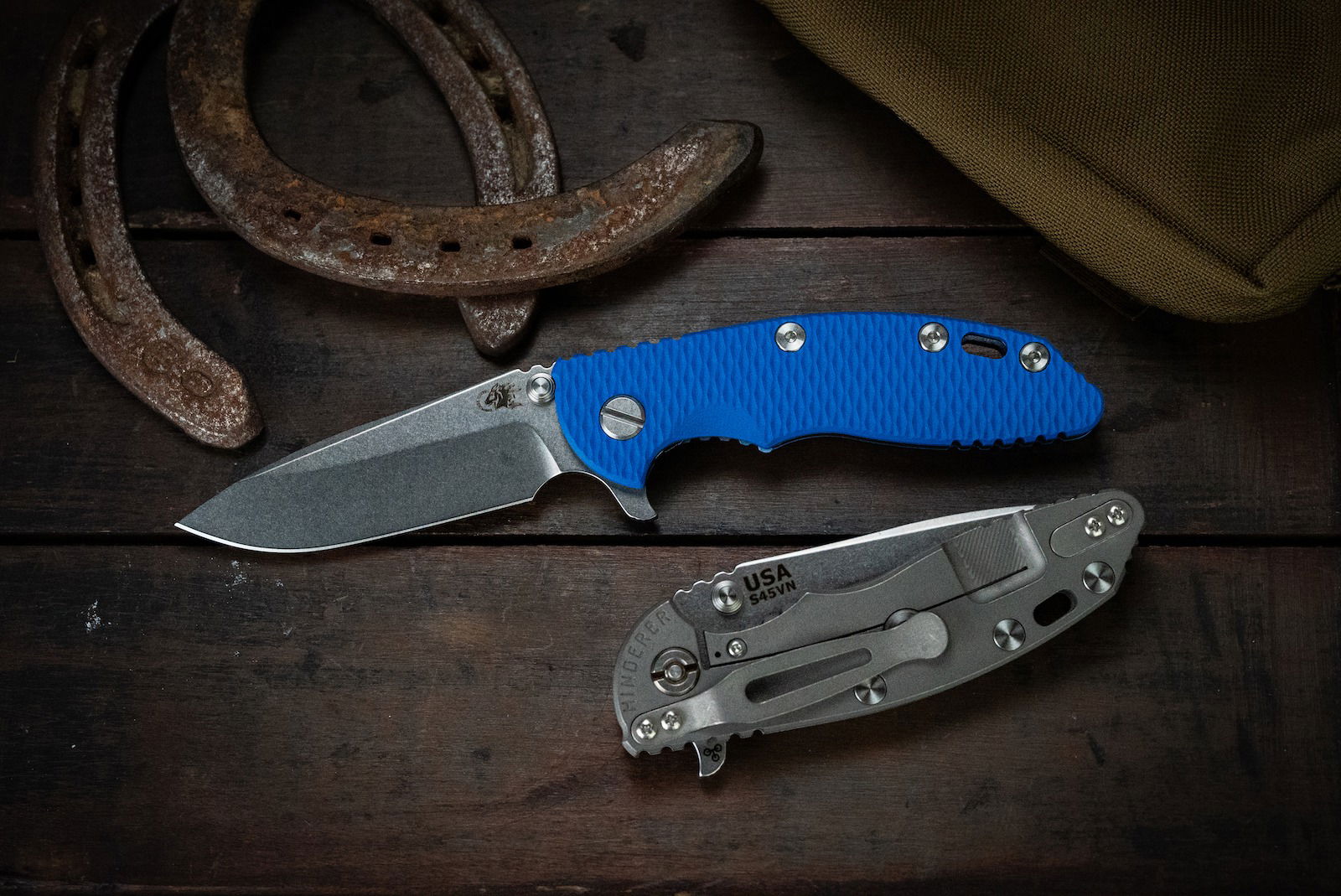
XM-18 3.25”: A New Size in the XM Lineup
The XM-18 3.25” bridges the gap between the 3” and 3.5” XM-18 models. Designed for balanced everyday carry, it delivers full XM durability and performance in a refined 3.25-inch blade length that feels comfortable in both hand and pocket.
10/21/2025
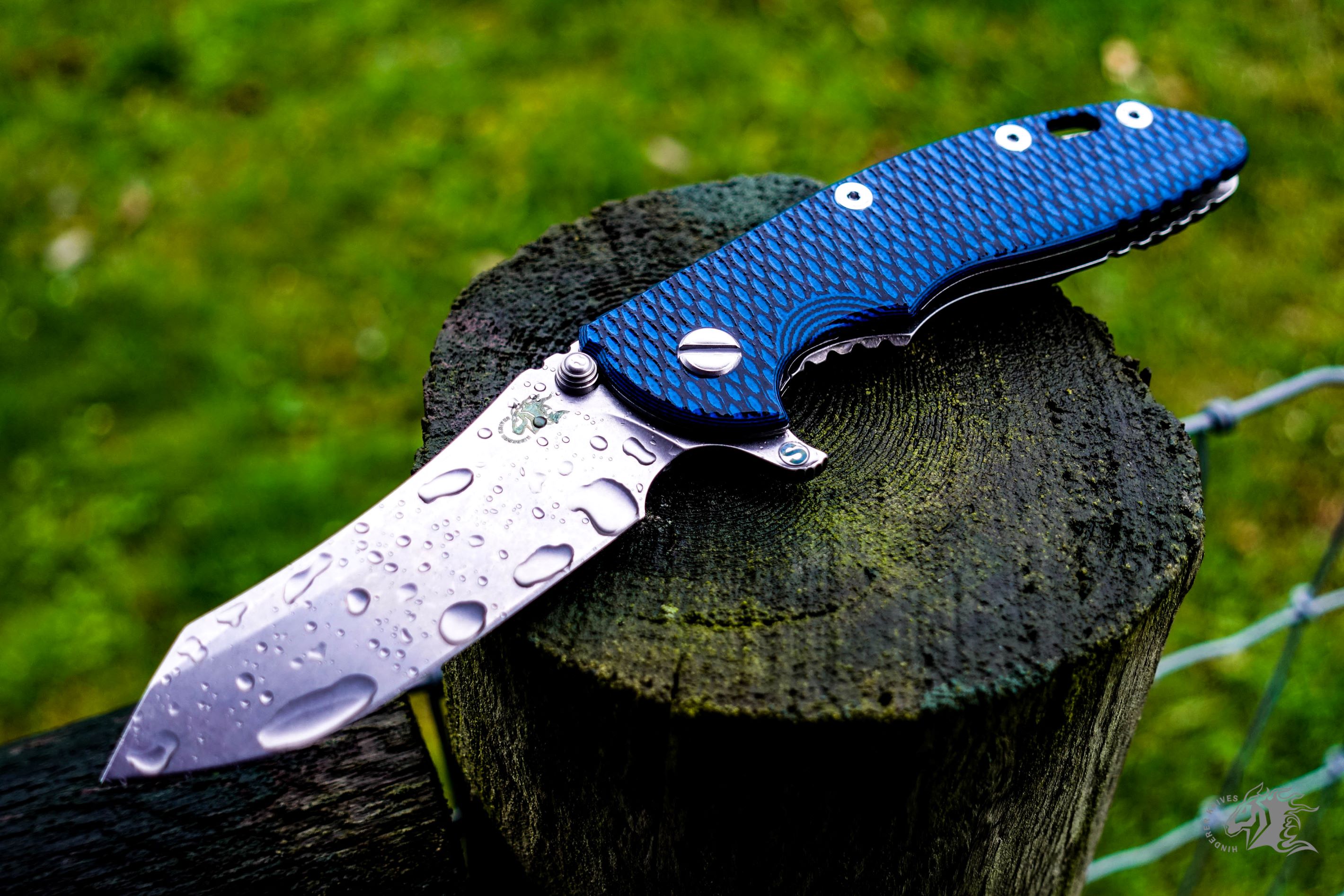
The Skinner Grind: Frontier Heritage Meets Modern EDC Performance
From the American frontier to today’s everyday carry, the Skinner grind embodies purpose-driven design. Originally crafted for hunters and trappers who relied on their knives for survival, the Skinner’s wide, sweeping edge provided clean, controlled cuts for dressing game. In this episode of Getting to the Point, Rick Hinderer dives into how he reimagined that heritage for the modern era—bringing the Skinner’s precision and durability into the XM platform. The result is a grind built for hunters, craftsmen, and EDC users alike—where frontier tradition meets modern performance.
10/15/2025
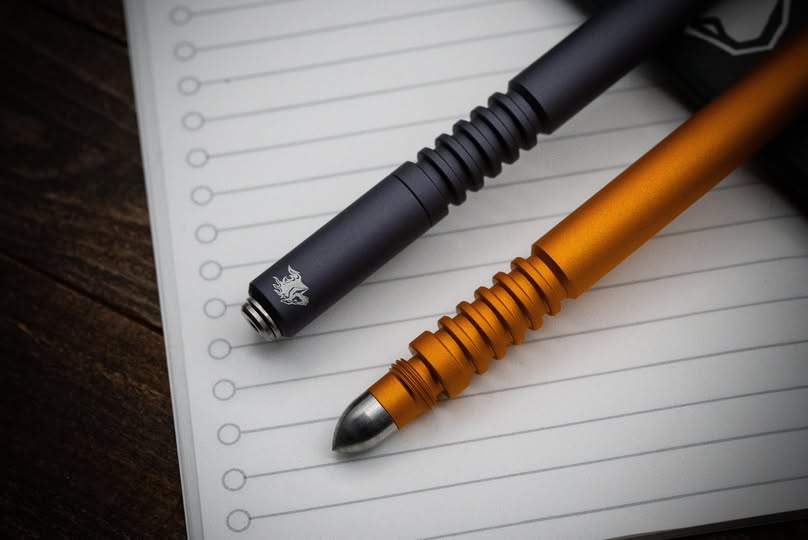
The Origin of the Tactical Pen: How Rick Hinderer Created a Category
Before the term tactical pen even existed, Rick Hinderer was building one. In the early 2000s, his passion for precision and self-reliance led to the creation of the world’s first tactical pen — the Modular Kubaton. From that breakthrough came the Extreme Duty and Investigator Pens, each built for performance, protection, and everyday use. Now, Rick Hinderer Knives continues the story with the release of a longer Investigator Pen — an American-made evolution of the original, designed for those who demand strength, control, and purpose in every tool they carry.
Live the Lifestyle
Subscribe to our lifestyle blog and be the first to receive latest articles, videos, how-to information and customer photos
The Origins of the Spearpoint Blade
The Spearpoint’s history begins exactly where its name suggests—with the spear itself. Long before modern knives, early makers recognized that the centered tip of a spear wasn’t just effective for piercing, but also for everyday cutting tasks. Once that spear tip was separated from the shaft, it quickly proved useful for dressing game and general utility, likely becoming one of the earliest all-purpose knife designs.
Rick notes that this realization likely happened hundreds of years ago, when someone looked at a spear tip and thought, “I can make a knife out of this.” That simple idea laid the foundation for a blade shape that has endured ever since.
What Defines a True Spearpoint Blade
At its core, a Spearpoint is defined by its centered tip. Geometrically, the point aligns directly with the handle, giving the user exceptional control and predictability when piercing or starting a cut. This same alignment is what made the spear effective historically, and it’s still what makes the Spearpoint so useful today.
While there are many variations of the Spearpoint, Rick explains that certain design traits remain consistent across all true examples. As long as the tip remains centered and the blade maintains balanced geometry, it still qualifies as a Spearpoint—regardless of stylistic variations.
Rick Hinderer’s Interpretation of the Spearpoint
Rick’s Spearpoint designs, seen on models like the Eklipse and XM-18, stay true to those defining traits while refining them for modern use. Even when paired with a clipped profile, Rick still considers the blade a Spearpoint because the tip remains centered within the handle.
Like many knife makers, Rick acknowledges that there are countless interpretations of the Spearpoint. His focus, however, is maintaining balance, control, and real-world functionality—qualities that have made the Spearpoint one of the most trusted blade shapes in history.
Slicing Performance and Blade Geometry
Another key feature of Rick’s Spearpoint design is the blade’s belly. By running the grind slightly higher than some traditional profiles, Rick increases slicing efficiency through the curved edge. This improved slicing performance is exactly what made early Spearpoints effective for skinning and processing game, and it continues to be one of the blade’s greatest strengths today.
The combination of a centered tip and a generous belly allows the Spearpoint to transition smoothly between controlled pierces and long, clean slicing cuts.
Why the Spearpoint Excels as an Everyday Carry Blade
Rick describes the Spearpoint as one of the best “do-everything” blade shapes available. If you’re looking for a true everyday carry knife—one that can handle a wide range of tasks—the Spearpoint is a natural choice.
Rick personally uses the Spearpoint for everyday work around the ranch, from cutting baler twine to cleaning up fence boards and reaming nail holes. He also points out its usefulness as a line knife on boats or ships, where control and slicing ability are critical. No matter the job, the Spearpoint consistently performs without needing specialization.
Top Swedge Design and Tip Performance
Across Rick’s folding knives and fixed blades, the Spearpoint features his signature top swedge. This design choice allows the spine to be thinned slightly toward the tip, improving piercing performance while still maintaining strength close to the point.
By reducing unnecessary thickness at the tip, the blade penetrates more easily without compromising durability—striking a balance between precision and toughness that’s essential for real-world use.
A Time-Tested Blade Shape for Real-World Use
At the end of the day, the Spearpoint isn’t flashy or specialized—it’s proven. It’s a blade shape that has worked for centuries and continues to perform today because its geometry simply makes sense.
If you’re searching for an everyday go-to knife that balances control, slicing ability, and versatility, the Spearpoint remains one of Rick Hinderer’s top recommendations. Built on historical design and refined through decades of hands-on experience, it’s a blade shape that does everything with precision and confidence.
Read full video script ▾
Hello everybody. Rick here, and welcome to another episode of Get to the Point with Rick. And today we're going to talk about a blade shape. A blade shape that is very common. It's probably one of the most common or most popular blade shapes out there. And a lot of blade styles and blade shapes actually came from this. And it's called the spear point. Now, the spear point—there's a lot of different renditions of it. There's a lot of different styles of spear points. But there are certain attributes of the spear point, or certain design traits, that run across all of the blades that you can call a spear point. The spear point actually came up in history from a spear. So that kind of tells you one of the main attributes of a spear point is that center tip. So the tip is actually centered on the blade geometrically. And that's the same as what you would see with the spear. So that was, I'm sure, some enterprising young knife designer and young knife maker or blacksmith back in the early days—eighteen hundreds, probably way even beyond or before that—took a spear that they used, and they probably used the spear point or the spear tip after they speared their game. And again, we could go way back on this and they actually used that to dress out their animal. So we're going to go into a little bit of my spear point—what I consider—and I even have a couple different renditions of that spear point. So what I have here is our Eklipse model in our spear point. And again, this spear point—I call it a spear point—but it actually has a clip. But I designed it as such with that center point. So it's actually a spear point—a little bit of a modified spear point. And again, a lot of knife designers and knife makers have done a bunch of different variations of the spear point. So again, just because it has a clip does not take away from the fact that it is a spear point. You see the center tip—it's centered in the handle. It has this belly on it. And the way the grind goes out is the fact that the grind is a little bit higher. So you have really good slicing ability in that belly—and that is what's really useful. That's what the guy found hundreds of years ago that's very useful for dressing, skinning game, and doing whatnot with that. The spear point is a very versatile knife. If it's one of those, if you're in that classification of an EDC that would do everything, the spear point shape would be one that I would recommend because it really does it. It falls in line with that everyday carry: going out on a boat or on a ship and using it as a line knife, cutting lines and things like that. Every day around the ranch, I use the spear point quite a bit. It's really useful for simple tasks like cutting baler twine and reaming out nail holes in board fence so that the horses don't get splinters from it. Different things like that—it works really fantastic. And I'm sure on your everyday use, whatever job you have, the spear point really shines well with that. So on the Eklipse, as well as the XM-18, and pretty much everything that we do—including the fixed blades—I like to thin down the top with the top swedge. And we're maintaining the thickness pretty close to the tip, but also slimming that down a little bit so that when you go to pierce into different things to work with it, you don't have that full thickness on the tip. So there you have it with the spear point blade style. Again, there's a lot of uses for the spear point. And I think you'll find if it's your everyday go-to knife, it's a versatile blade shape that will do everything with precision that you want. So there we go on the spear point. Stay tuned for more videos where I talk about a lot of other design aspects of knives, and we'll see you at the next video.
Spearpoint FAQ
What is a Spearpoint blade shape?
A Spearpoint is defined by its centered tip—the point sits in line with the handle for balanced control and precise piercing. It’s one of the most common and time-tested blade shapes, with many modern profiles evolving from it.
Where did the Spearpoint design come from?
The Spearpoint traces back to the spear itself. Historically, people realized the spear tip could be used not only for piercing, but also for everyday cutting and dressing game—leading to early knife designs built around that centered point.
Why is the Spearpoint considered a versatile EDC blade?
The geometry makes it a true “do-everything” blade: a centered tip for control, plus a belly that gives strong slicing performance. Rick recommends it as an everyday carry profile because it handles a wide range of tasks with precision.
What makes the Hinderer Spearpoint different?
Rick runs the grind slightly higher to improve slicing through the belly and incorporates his signature top swedge to thin the spine toward the tip. This combination improves piercing performance while maintaining strength where it matters most.
What tasks does the Spearpoint excel at?
The Spearpoint shines in everyday utility—cutting rope or line, daily carry tasks, and work around the ranch like cutting baler twine. It’s also historically proven for dressing and skinning game thanks to its slicing belly and controlled point.