The Skinner Grind: Frontier Heritage Meets Modern EDC Performance
Related Posts
01/01/2026
XM-18 3.25”: A New Size in the XM Lineup
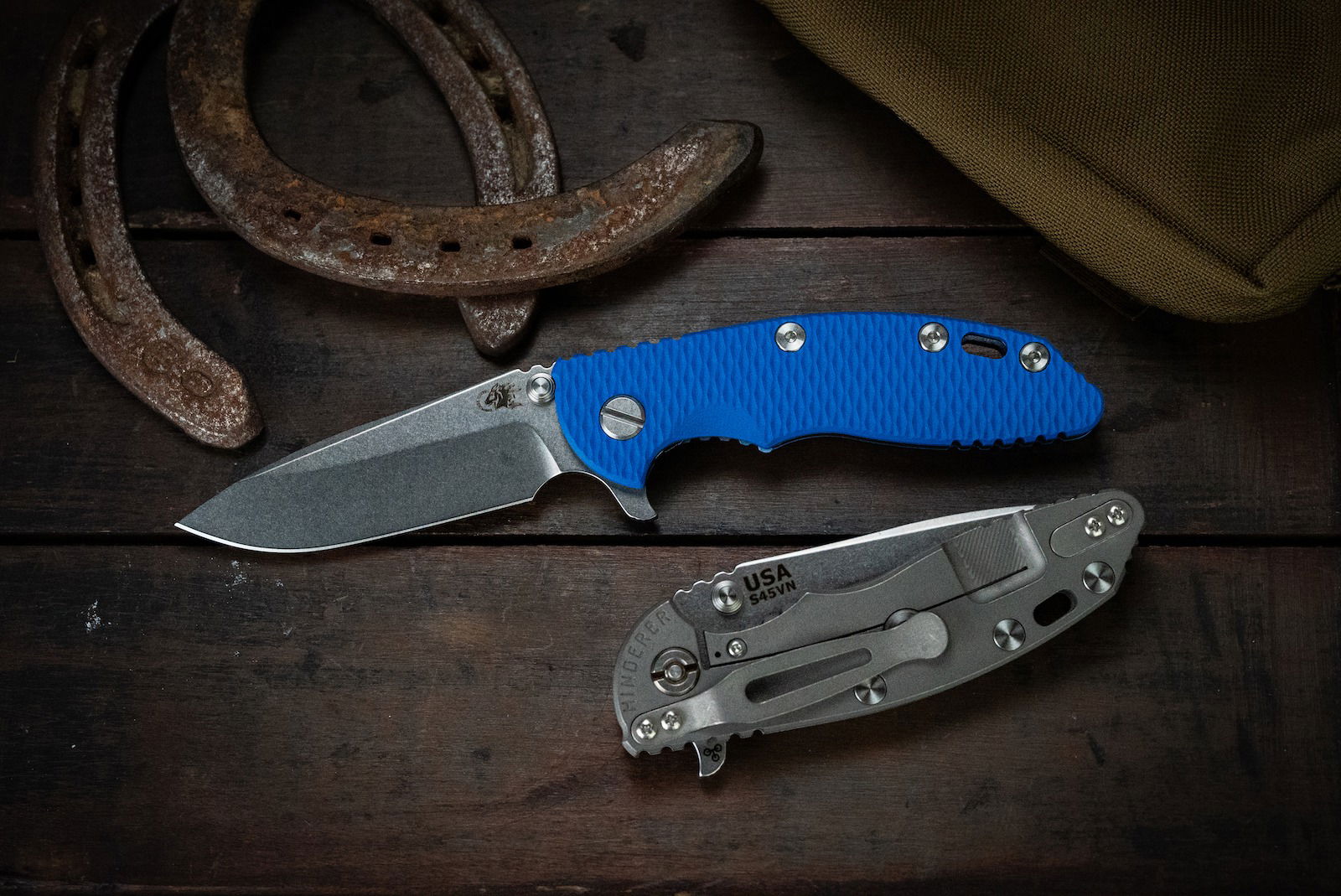
The XM-18 3.25” bridges the gap between the 3” and 3.5” XM-18 models. Designed for balanced everyday carry, it delivers full XM durability and performance in a refined 3.25-inch blade length that feels comfortable in both hand and pocket.
01/27/2026
From Spear to Pocket: The Evolution of the Spearpoint Blade
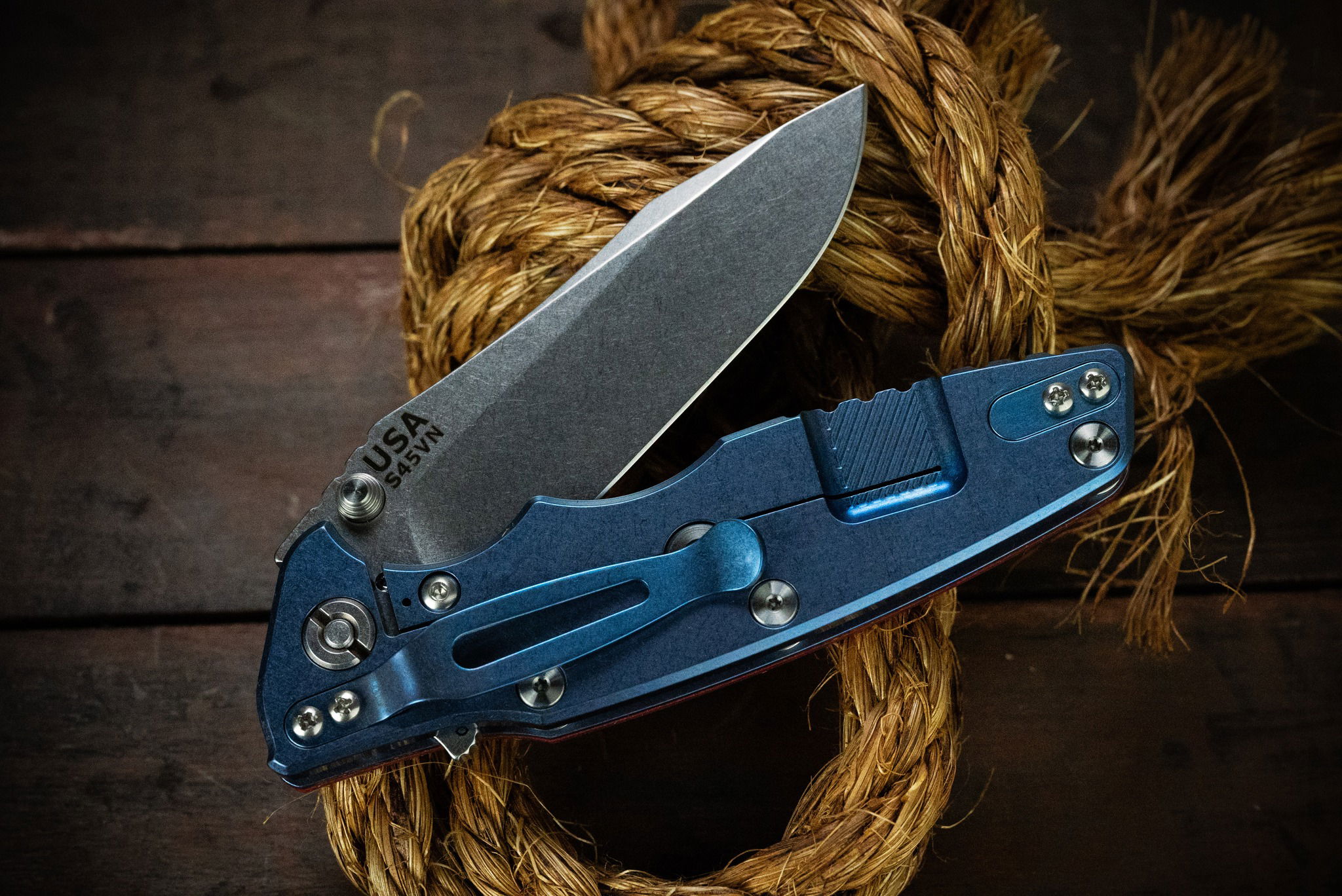
In this episode of Get to the Point with Rick, Rick Hinderer breaks down one of the most common—and most capable—blade shapes in knife history: the Spearpoint. It’s a design so fundamental that countless blade profiles have evolved from it, yet it remains one of the most effective choices for everyday carry and real-world work.
10/15/2025
The Origin of the Tactical Pen: How Rick Hinderer Created a Category
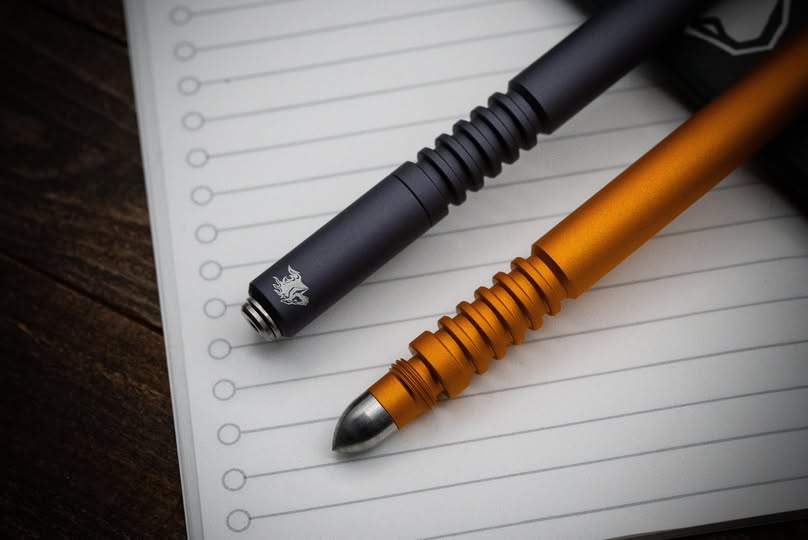
Before the term tactical pen even existed, Rick Hinderer was building one. In the early 2000s, his passion for precision and self-reliance led to the creation of the world’s first tactical pen — the Modular Kubaton. From that breakthrough came the Extreme Duty and Investigator Pens, each built for performance, protection, and everyday use. Now, Rick Hinderer Knives continues the story with the release of a longer Investigator Pen — an American-made evolution of the original, designed for those who demand strength, control, and purpose in every tool they carry.
Live the Lifestyle
Subscribe to our lifestyle blog and be the first to receive latest articles, videos, how-to information and customer photos
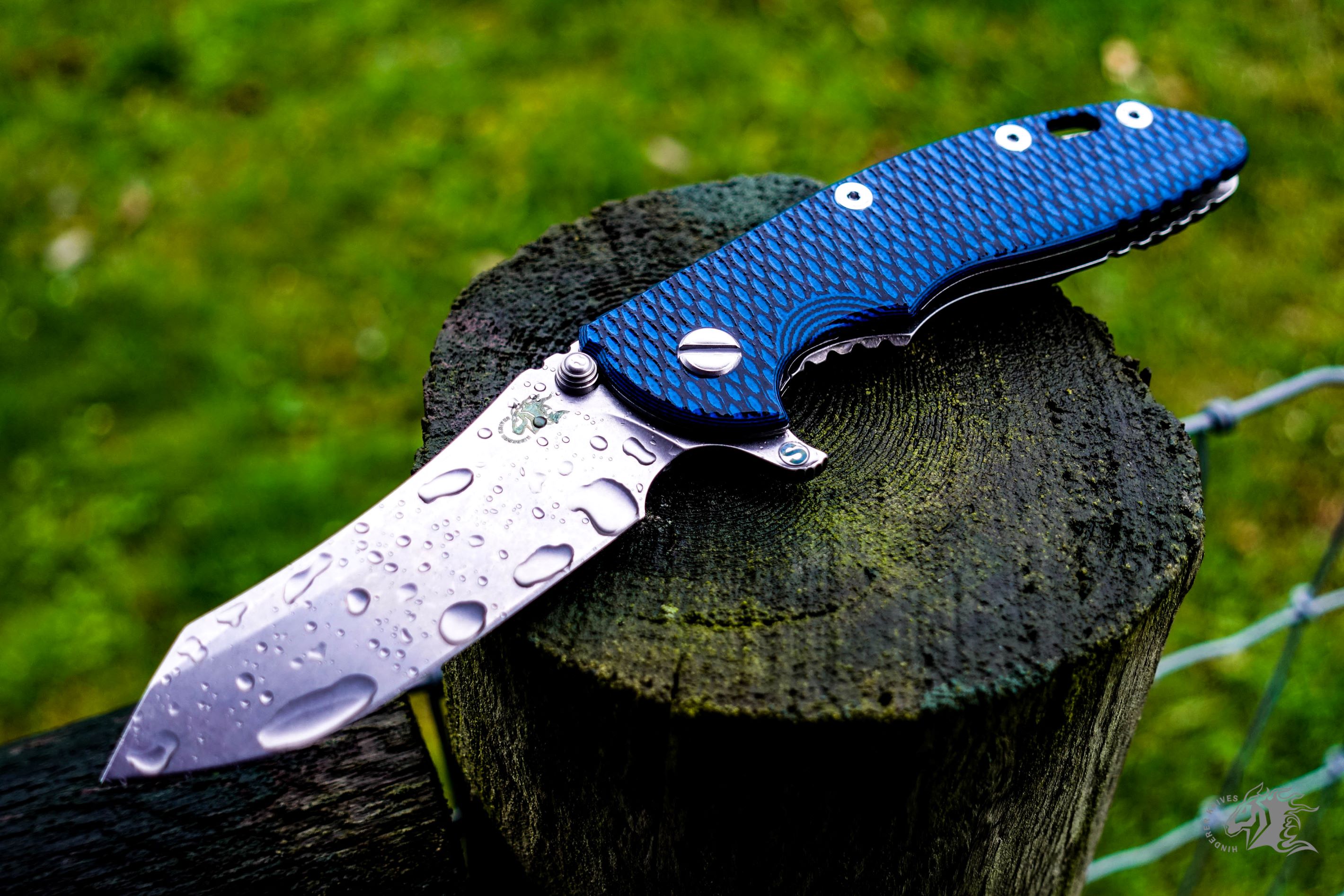
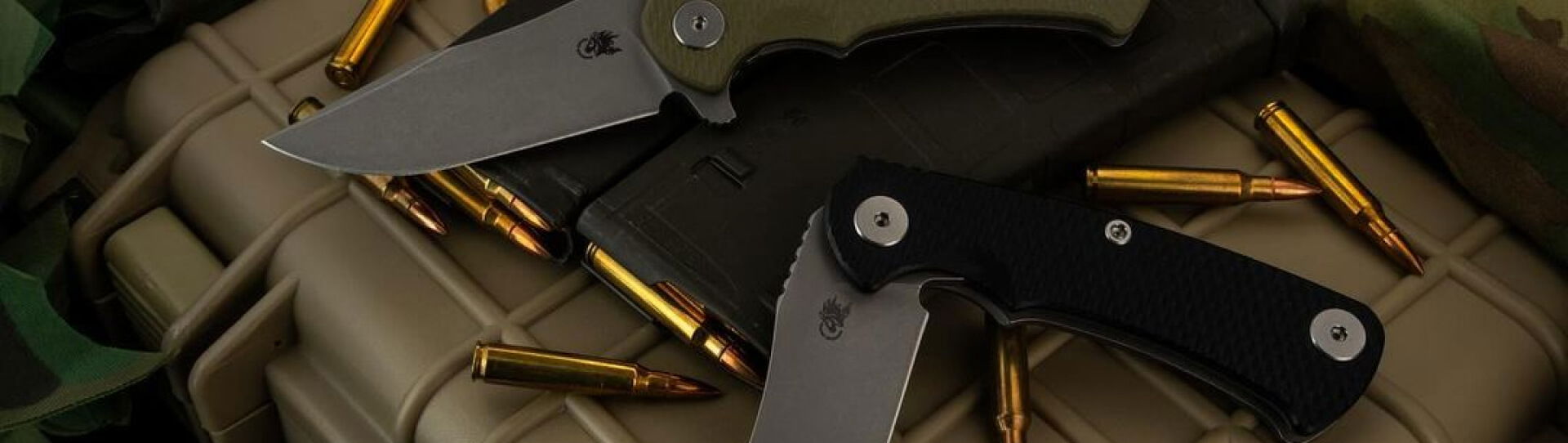
From the old frontier to the modern pocket, the Skinner blade has always been about purpose — a design born from survival, refined for precision. In this edition of Getting to the Point, Rick Hinderer breaks down the story behind the Skinner grind: where it came from, why it’s unique, and how he adapted a classic hunting profile into one of the most versatile blades in the Hinderer lineup.
A Blade Rooted in Survival
The Skinner’s origins trace back to the days of the Old West — when every hunter, trapper, and frontiersman relied on their knife not as a tool, but as a means of survival. Dressing game and feeding your family meant your edge had to perform, no excuses. Those early Skinner blades were purpose-built for one thing: clean, controlled cuts when skinning or caping out game in the field.
Rick brings that same spirit forward with his modern interpretation. Designed originally for hunters and outdoorsmen, the Hinderer Skinner keeps the heritage alive while bringing 21st-century precision and toughness to the table.
Form Follows Function: The Design Behind the Blade
When Rick set out to create a folding knife version of the traditional Skinner, he wanted to retain the shape’s efficiency while adapting it for everyday carry. The result is a wide, swooping front that keeps more of the cutting edge in contact with the material — ideal for clean slicing, precise control, and long, sweeping cuts.
That bulbous forward curve isn’t just for looks. It provides natural control in caping and skinning motions, while the downward slope toward the tip offers a stable point for detail work. Whether you’re dressing game, cutting leather, or tackling daily EDC tasks, the Skinner’s geometry excels at clean, confident cuts without sacrificing strength at the tip.
Built for the Field — and Beyond
Available in the XM-18 3.5”, XM-18 3”, and XM-24 platforms, the Skinner grind brings purpose-built performance across multiple sizes. Compared to the slicer or drop point profiles, the Skinner carries a bit more tip strength and edge engagement — making it ideal for heavier cutting, crafting, or outdoor use.
Leatherworkers, craftsmen, and hunters alike have found this grind perfectly suited for precise, controlled cuts through thicker material. Yet even for those who don’t hunt, its wide edge and swooping profile make it a remarkably capable everyday companion — a tool that feels at home whether you’re in the woods or in the shop.
Closing Thoughts
From the plains of the frontier to the fields of modern EDC, the Skinner grind is a reminder that true knife design never goes out of style — it just evolves. Rick’s take on the classic Skinner honors its roots while delivering the toughness, balance, and precision that define every Hinderer knife.
Read full video script ▾
Hey, everybody, Rick here. And welcome to another edition of getting to the point. And we're we're trying to soak up as many of these fall days as possible. We're just starting into the fall foliage around here in Northeast Ohio. So the other reason why I wanted to do it outside is because we're doing another blade style that's kind of, uh, more of a hunting type blade, um, that I designed a few years ago called the Skinner Blade. And, um, so I wanted to discuss that, that blade style with you all, especially the beginning of, uh, I know Ohio. We're right into right into deer season, uh, bow hunting. And I'm sure a lot of other places around the United States are into the hunting seasons. And even though a lot of you don't hunt, um, there's a lot of aspects of the Skinner Blade that I think you'll find very useful. That really came from the heritage of, uh, of the Old West, the old frontier days when, um, it was it was really part of survival is being able to dress out your game, um, and, uh, and feed your family. So with that, let's get right into it. So again, the Skinner Blade, kind of it's, uh, it came from, uh, you know, more of the, like I said, the frontier days. And let me let me first show you exactly. This is the XM-18. Uh, this is actually a three and a half inch skinny skinner and some of the attributes of the blade style. Um, I can kind of go over to, uh, show you, uh, where they came from and the usefulness, especially from a dressing game. The the front of the blade is probably the most recognizable as a as a skinning type blade or a Skinner blade. And what they use that for was to was either caping out, um, their game or actually skinning after after they harvest the, uh, the animal, then they would you would have to obviously skin and the long swooping up front of the blade really worked great for keeping that precise cut when you're caping or when you're when you're skinning out the animal. It's really you want a lot of that cut into, uh, into that area and the front part of the blade, usually it's pretty wide. And that again, that's for that control. That's where that control that you want in that cut. And obviously back in the frontier days and on and going on through the late eighteen hundreds, early nineteen hundreds, a lot of pocket knives had have Skinner style blades, but most of them were synonymous with like, kind of like your butcher knives. A lot of butchers use that type of a of a blade profile. So years ago when I decided to, uh, to do a blade where we had some of the characteristics of a skinner, but at the same time, this is an EDC knife. This is a knife that you're going to carry and use every day. So how does that how does that transfer over into a a folding knife. Well, when, when I, when I first started designing it out again I wanted that that reinforced that that that wider tip, wider front end of the blade. So I can get a lot of swooping angle. Uh, you can see that's right here a lot of swooping angle to that tip. And again, it's for those really fine cuts where you want a lot of the edge into the material. Maybe not as much as some of the other blade styles. This blade style, you're going to have a little more edge into whatever you're cutting. And that could go that could be very useful for a lot of different projects. Um, so, or things that you're using out in the field or wanting to cut out in the field, it's really a pretty useful, uh, useful cutting edge. And I left, uh, again, skinning type knives have this I would call it kind of like a bulbous type front part of the blade. And, um, so what I did was I kind of replicated that here with this nice swoop up to give it a really nice curve, and then it accumulates at the edge or at the top part of the blade to give it that nice downward slope to the very front. And again, that's uh, that will make it really useful for being able to to get those precise cuts. Okay. Let's talk about the efficiency of this design of the Skinner design when it pertains to the XM eighteen or some of my, uh, my other models. Uh, we have this in XM-18 3.5", the XM-24 and XM-18 3". Uh, so there's, uh, there's a few different models that we have the Skinner. And so the differences in why why you would want to choose the Skinner profile over like the drop point. Uh, the drop point is kind of close to it or the slicer. There's a few things that make this a little bit different. Especially like the slicer. The slicer is a great, uh, a great blade style and blade grind. Um, but this one's going to have a little bit more toughness on the tip. So if you're, if you're going to be cutting, Uh, using cutting tasks, say, cutting through leather. Craftsman really like this style of blade for, um, you know, like, especially leather makers and, and, uh, things like that to where if you're going to be using it to cut heavier material, uh, where you want more of the edge into the cut. This is going to be a great night for that. A great profile for that. Whereas, like the slicer, you may not have as much of a of a front tip, um, toughness for really getting into some of those long cuts. And if you're an outdoorsman, it's a perfect blade. It's a perfect blade style. So my take on the Skinner style blade and why, why did I want to design it? Why did I think, hey, you know, there's a need for this style of blade. When I had some of the other styles already out there, and honestly, I was thinking, I was thinking more about the the hunter, um, the elk hunter out west. Uh, the whitetail hunter in Ohio, what can they what can they use that would they could get the most out of their folding knife. Uh, for dressing out their harvested game. And that really drove me to this blade style. And again, it's a it's a very versatile. It's a really versatile blade style that not only is good for hunters, uh, and, uh, outdoorsman and what they want in a, in a good carry knife, but also the everyday person. I think there's a lot of attributes to this blade style that the everyday carry individual would find very helpful. So it's not just for hunters, it's it's really for everybody who wants a really good sturdy blade that has a nice sloping angle, uh, for whatever cutting tasks they're going to, they're going to do. So, guys, in closing, I'd like to mention to you again, this is actually the skinny Skinner. So it's a skinny version of our regular XM eighteen three and a half inch, and it has a little bit less blade thickness as the regular XM-18. Uh, which really the skinny series really makes a very comfortable carry knife. And, uh, the reason I mentioned that is because one of our great friends and dealers, USA, made blade down in Salisbury, North Carolina. They just got Scott just got a batch of these in, get Ahold of USA made blade and be sure to pick yours out.
Skinner FAQ
What is the Skinner grind and where did it come from?
Born on the American frontier, the Skinner was built for clean, controlled skinning and caping. Rick’s modern take preserves that wide, forward sweep so more of the edge stays in the cut—then adapts it for a folding EDC format.
How does the Hinderer Skinner differ from the Slicer or Drop Point?
The Skinner keeps more edge engaged and carries a bit more tip toughness—great for long, guided passes through tougher material (like leather). Versus a Drop Point, the wide forward belly and downward-sloped tip emphasize controlled slicing and precision.
Is the Skinner grind only for hunters?
No—while it shines for caping/skinning, the geometry translates to everyday use: craft work, leather cutting, and tasks where smooth, confident edge-in contact matters. It’s a versatile EDC profile, not just a hunting blade.
Which Hinderer models offer the Skinner grind?
It’s available across multiple XM platforms, including the XM-18 3.5", XM-18 3", and XM-24, so you can pick the size that fits your carry.
What’s the “Skinny Skinner,” and why choose it?
The Skinny Skinner (e.g., XM-18 3.5" Skinny) uses reduced blade thickness for a slimmer, lighter pocket feel while keeping Skinner performance—great if you want maximum comfort in the pocket.
What tasks does the Skinner grind excel at?
Precision caping/skinning, sweeping slices through thicker or fibrous materials, and controlled EDC cuts—especially when you want more of the edge engaged with the workpiece. Leatherworkers and outdoorsmen love this profile.