What Is a Bowie Knife? The Bowie Grind, History, and Modern Uses
Related Posts
09/02/2026
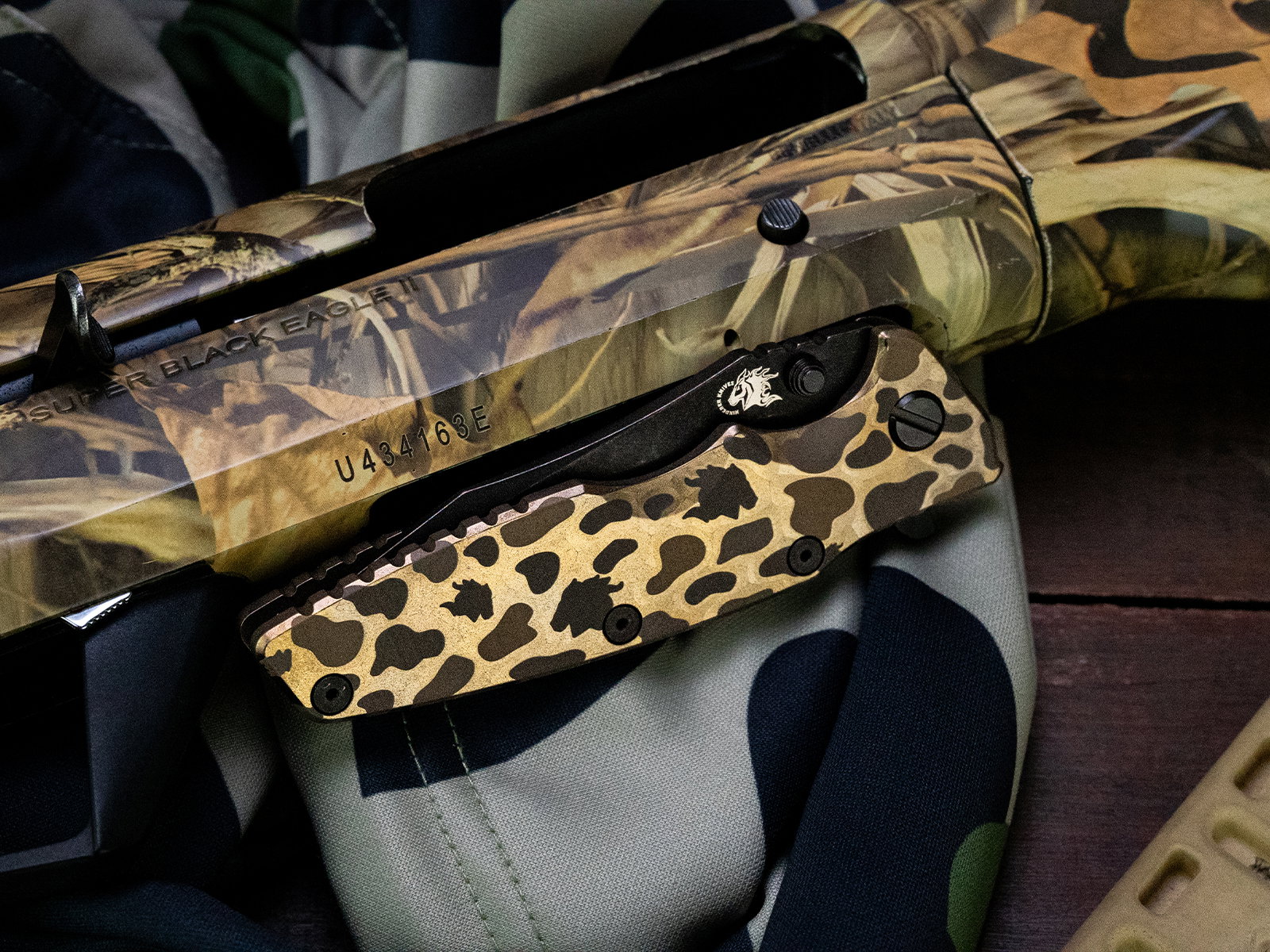
From Frog Skin to Duck Camo: The History Behind Our Newest Finish
What many know today as Duck Camo has a history that stretches back to World War II. Originally known as Frog Skin, the camouflage went from the South Pacific to the duck blind, becoming a pattern recognized by generations of hunters. Discover the history behind Frog Skin Camo and how it inspired the newest finish from Rick Hinderer Knives.
04/23/2026
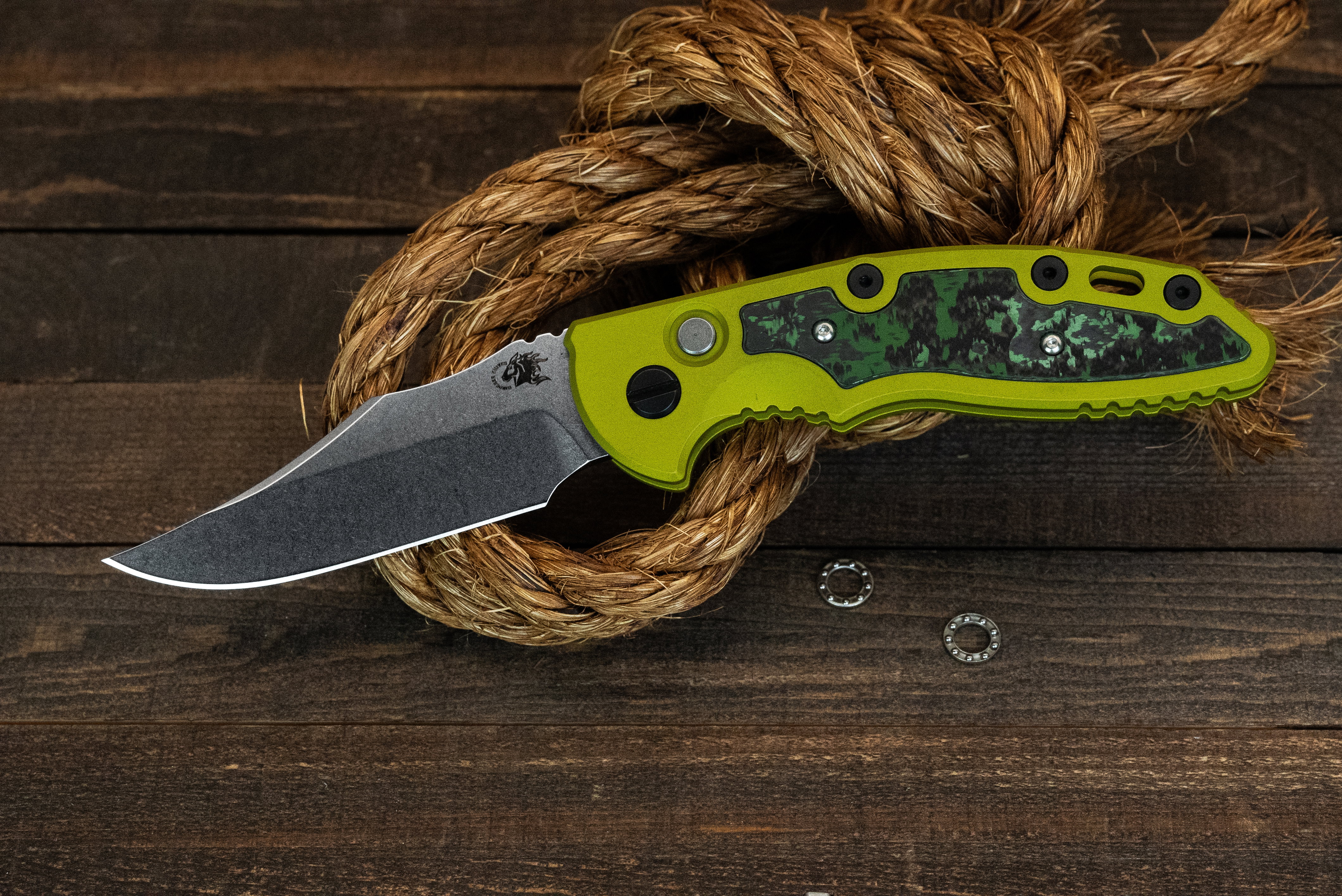
Hinderer Automatic Knives Gen 2: Tri-Way System & New Website Launch
Hinderer automatic knives are entering a new generation with the introduction of the Gen 2 platform. Featuring a redesigned button lock automatic mechanism and the addition of the Tri-Way Pivot System, this update brings new levels of performance and customization to USA made automatic knives. Alongside the release, a dedicated website for Hinderer automatic knives is launching in the coming weeks, with more announcements to follow.
03/25/2026
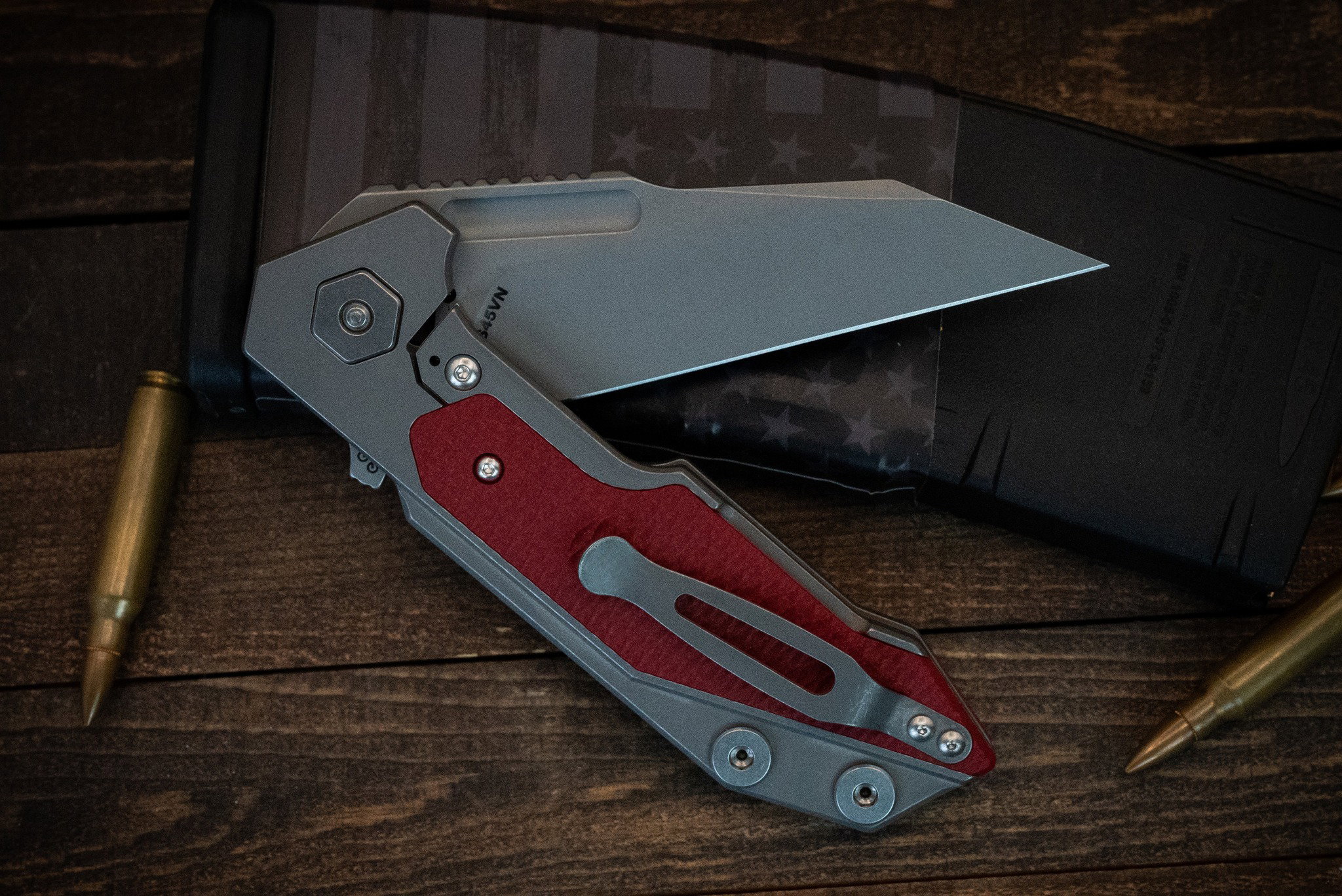
The Wharncliffe Grind: Precision, Control, and Unexpected Power
The Wharncliffe is a precision-driven blade shape known for its straight edge and controlled tip. Rick’s modern design enhances that classic profile with improved balance and durability, making it a highly capable everyday carry blade.
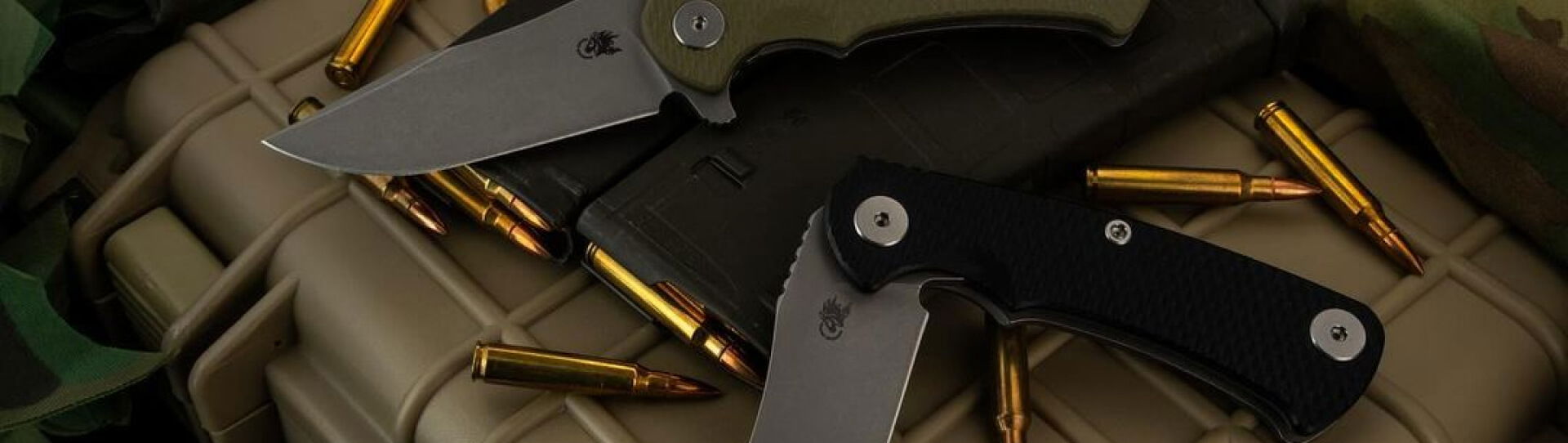
Live the Lifestyle
Subscribe to our lifestyle blog and be the first to receive latest articles, videos, how-to information and customer photos
In this episode of Getting to the Point, Rick Hinderer dives into one of the most iconic blade styles in American history—the Bowie knife.
More than just a blade shape, the Bowie knife represents a lineage of design that spans from early frontier tools to modern everyday carry. With roots tied to legend, battlefield use, and evolving utility, the Bowie has taken on many forms over the years.
Rick walks through that history and how it ultimately influenced his own interpretation of the Bowie grind across Hinderer knives.
What Is a Bowie Knife?
A Bowie knife is defined by its distinctive clip point blade, long cutting edge, and strong tip designed for both slicing and piercing tasks.
Originally popularized in the early 1800s, the Bowie knife quickly became one of the most recognizable blade styles in history. While many people associate the Bowie blade with a large fixed blade, the design has evolved over time into both fixed and folding knives.
At its core, the Bowie grind is about versatility, strength, and cutting efficiency. A combination that has kept it relevant for generations.
The Origin of the Bowie Knife
The story of the Bowie knife begins in the early 1800s, most commonly associated with Jim Bowie and the Sandbar Fight.
From that moment on, the Bowie knife became more than just a tool, it became a symbol of American grit and frontier survival.
But unlike many blade shapes, the Bowie knife was never just one defined design.
As Rick explains, the history of the Bowie knife is vast, with countless variations appearing over time . From Sheffield-made blades to frontier carry knives, what people considered a Bowie knife often depended on the era and its intended use.
More Than Just a Clip Point Blade
When most people picture a Bowie knife, they think of a classic clip point Bowie blade, a long edge paired with a clipped spine.
And while that’s one of the most recognizable versions of the Bowie grind, it’s far from the only one.
Historically, Bowie knives have included:
-
Traditional clip point fixed blades
-
Spear point and dagger-style Bowie knives
-
Large folding Bowie knives
-
Ornate and presentation-style pieces
Rick even points out that some historical Bowies look more like daggers than what most people expect today, yet they were still considered Bowie knives in their time .
That’s what makes the Bowie knife unique.
It’s not just a single shape, it’s a category built on purpose, adaptation, and real-world use.
From Frontier Knife to Military Influence
As the Bowie knife evolved, it found its way into military experimentation as well.
In the early 1900s, the U.S. military explored Bowie-style bayonets to create a blade that could serve both as a weapon and a field tool.
The goal was simple: reduce the need to carry multiple tools by combining them into one.
While these early Bowie bayonet designs didn’t fully succeed in either role, they reinforced what the Bowie knife had always been about:
A multi-purpose working blade
Later, designs like the SOG Bowie carried that concept forward into modern military use blending the aggressive Bowie blade profile with real-world performance.
Rick Hinderer’s Modern Bowie Grind
When Rick set out to design his version of the Bowie knife, the goal wasn’t to copy history but to build on it.
Pulling inspiration from:
-
Classic clip point Bowie knives
-
Military-inspired Bowie designs
-
Historical blade proportions
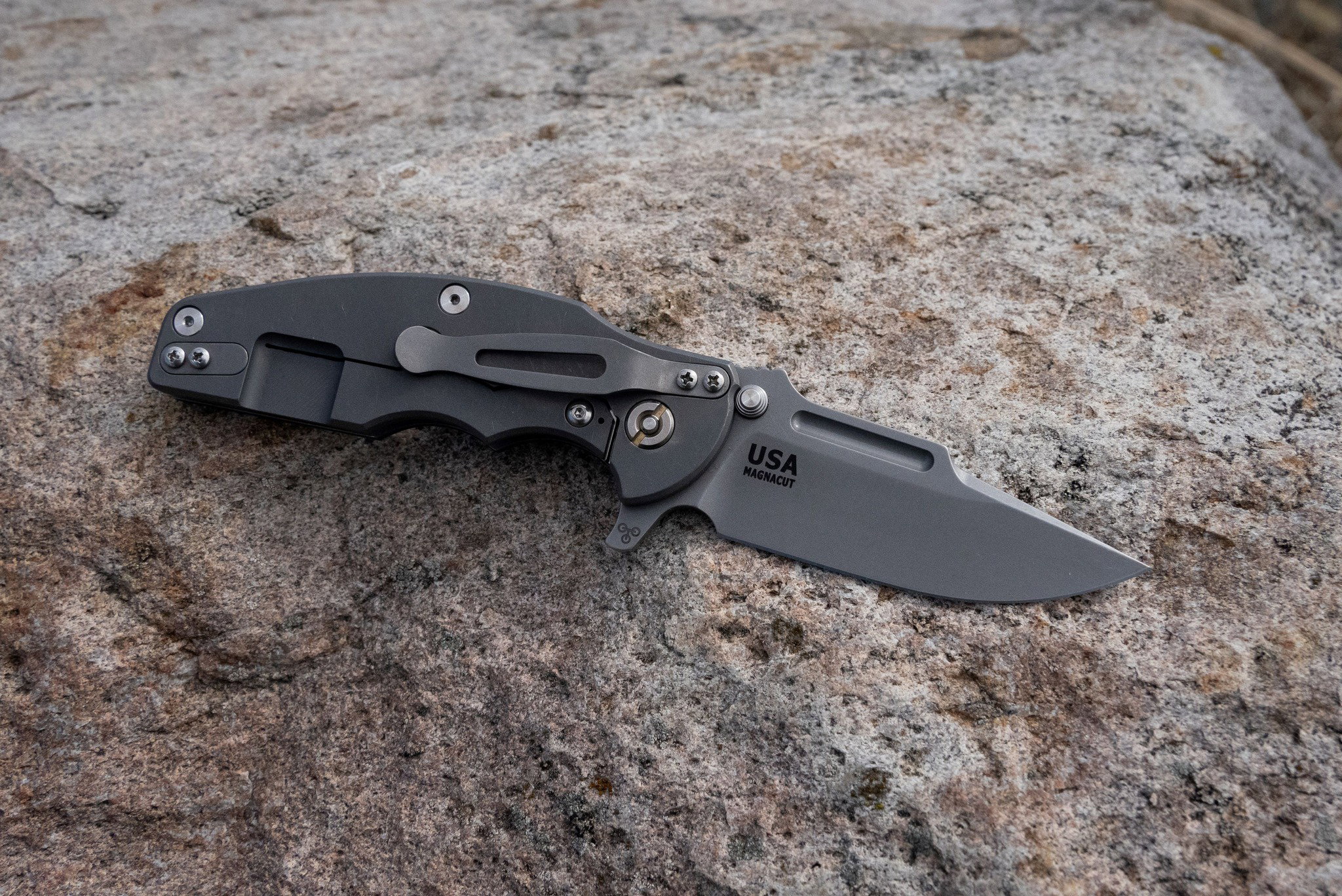
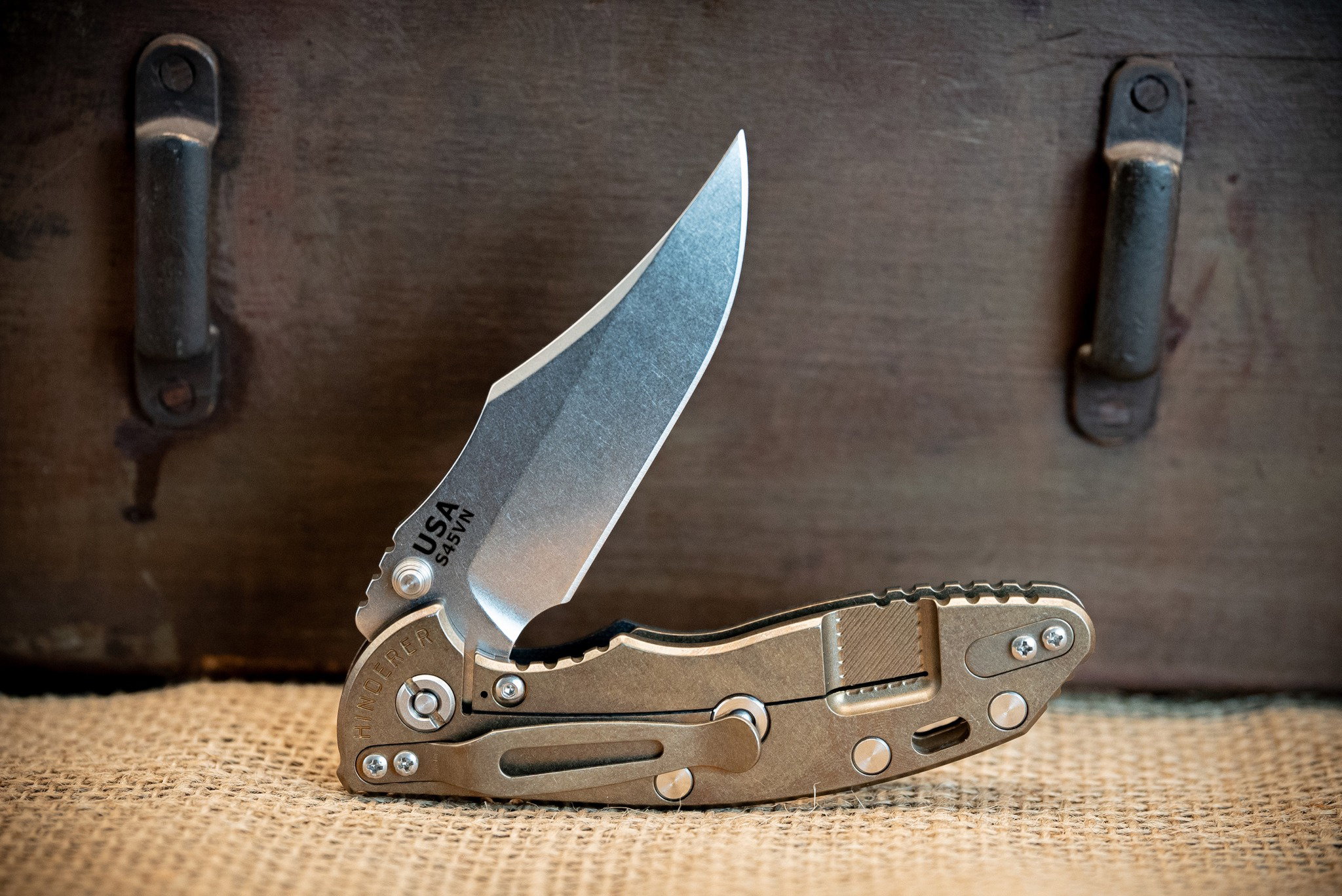
Rick developed a modern Bowie grind that fits seamlessly into platforms like the XM-18 and Eklipse.
One of the defining features is the refined clip and spine profile balancing the aggressive look of a traditional Bowie blade with improved control and usability.
You can also see influence from blades like the SOG Bowie, which helped shape Rick’s early appreciation for the design .
The result is a Bowie knife that:
-
Maintains the iconic Bowie blade shape
-
Improves cutting control
-
Works in real-world, everyday carry scenarios
A Bowie Blade Built for Real Use
The Bowie knife isn’t just about looks, it’s built to perform.
The Bowie grind offers:
-
Strong piercing capability from the clipped tip
-
Efficient slicing performance from the long cutting edge
-
Versatility across a wide range of tasks
Whether in the field, the shop, or everyday carry, the Bowie blade adapts well to real-world use.
👉 Explore our Bowie blade knives built for hard use.
Why the Bowie Knife Is Still Popular Today
At a glance, the Bowie knife stands out.
The clipped spine, sweeping edge, and strong tip give it a presence that’s instantly recognizable. But beyond that, it continues to perform in ways that make it relevant today.
The Bowie knife remains popular because it combines:
-
Heritage and history
-
Practical cutting performance
-
A design that translates across platforms
From fixed blades to modern folding knives, the Bowie grind continues to prove its value.
Built on History—Designed for Today
For Rick, the Bowie knife is more than just a blade shape but a connection to history.
When you look at a Bowie blade, you’re looking at something that traces back generations of design and use .
That history is what sets it apart.
And that’s what makes it worth carrying forward.
Closing Thoughts
The Bowie knife has never been just one thing.
It’s been a weapon, a tool, and a foundation for modern knife design.
Rick Hinderer’s interpretation of the Bowie grind respects that legacy while refining it for today bringing together history, performance, and everyday usability.
For those who appreciate both function and heritage, the Bowie knife remains one of the most capable and recognizable blade styles ever created.
Read full video script ▾
Hey everybody. Rick here and welcome to another segment of Getting to the Point with Rick. And today, today’s going to be fun. We’re going to talk about my Bowie grind. And the reason it’s going to be a lot of fun is I want to explain where I got a little bit of history of kind of where the Bowie came from, what we think of as the American Bowie knife, and maybe some variations that you may not be aware of. A lot of those different variations and grinds and blade styles, they all kind of were responsible for what I came up with with my rendition of the contemporary Bowie knife. And I say contemporary, that’s kind of like nowadays what you see a lot in folding knives, small fixed blades, large fixed blades, and both custom knives as well as production knives. And the Bowie itself really transcends a lot of different thoughts and shapes and sizes. So I’ll go into that a little bit. And the reason why it’s a lot of fun for me is because I got to dive into my collection and bring out—so it’s almost kind of like show-and-tell day. I got to bring out some of the knives out of my collection. I have some original 1800s Bowies, kind of like the Sheffield Bowie, what we think of as the historical Bowie, and then kind of just take you on a little bit of a history on where we’re at today and where that Bowie—what we think of as the Bowie—how far it has come, how it came to be, where I’m at right now in the Bowie knife, and maybe get a little understanding of it. So the history of the Bowie is really pretty vast. It’s been studied a lot. A bladesmith named James Batson—Doctor Batson—did a lot of study on the Bowie knife, from Jim Bowie, James Bowie, all the way back to the story of the Sandbar Fight, which was kind of like the start of what we can think of as the Bowie and how it was actually made or designed. A lot of other contemporary people have been studying it as well. Bruce Voyles, a lot of you know him from Blade Magazine, he’s done a lot of study on the American Bowie knife. In fact, he co-authored a book—it’s called the Antique Bowie Knife Book. It’s been out of print for a while, but if you can find it, definitely grab it. It’s a great picture study of historical Bowies. In fact, one of the Bowie knives that’s in his book, I have in my collection. I’ve got it on the table in front of me, and I’ll show you that because it’s very interesting. When you think of a Bowie knife, you wouldn’t think of this one. So we go all the way back to the Sandbar Fight and Jim Bowie. We think of the Alamo—Jim Bowie was there—so there’s a lot of history surrounding it. Some of it is fact, some of it is fable. I won’t get too deep into that because we’d be here for a long time. So let’s get into the Bowie shapes and what they were actually used for. Way back when, a lot of you think of the Bowie as a clip point. This one I have here is probably one of my favorites. It goes back to the 1850s. It’s about ten or eleven inches long. It’s what we’d call pretty ornate nowadays, but you can see the Bowie clip point. It has a double guard. So when you look at this knife, if you go into an antique store or flea market and see something like this, you immediately think—that’s a Bowie. Because it has that traditional Bowie shape. Now here’s another one, and this is where we start getting into what you don’t think of as a Bowie knife—but it is actually a Bowie. This is an original Bowie, and it looks like a dagger. It’s a double-edged spear point blade. So why is it considered a Bowie? Well, a lot of what we consider Bowies were carried on the frontier and during the Civil War. People carried these and referred to them as Bowies. This one doesn’t have the clip point—it’s more of a spear point—but it was still considered a Bowie knife. I would say this one was more of a self-defense tool. So now we’ve got the traditional clip point Bowie and then something completely different that’s still considered a Bowie. Now let’s talk about folding Bowies. Yes, there were Bowie folding knives back then. This one here has about a nine-inch blade, and it folds. I still wouldn’t put it in your pocket, but it is a folding Bowie. You can see the clip point and double guard. Now I also brought one of my own Bowies that I made about 25 to 27 years ago. This is a Mediterranean-style Bowie. It has Damascus steel, an Impala horn handle, and a mammoth ivory butt cap. The blade is about nine inches long, and you can clearly see the Bowie lines in it. So now let’s move forward a bit. In the early 1900s, the U.S. military started experimenting with different bayonets. They wanted something that could be used for multiple purposes—not just as a weapon but also for clearing brush and general tasks. Instead of carrying both a bayonet and a knife, they tried to combine them. That’s where the Bowie-style bayonet came into play. This one here is a 1906 Bowie bayonet made for the .30-40 Krag rifle. It looks like a Bowie, and it definitely has that American feel to it. But it didn’t work very well as either a bayonet or a utility knife. Still, it shows how influential the Bowie design had become. Now moving into more contemporary times, one knife that really stands out is the SOG Bowie. It was designed for special operations units during the Vietnam era. It has a distinctive profile with what I call a double hump. This knife actually got me interested in making knives back in 1987. A friend of mine had one, and I saw him using it—it really stuck with me. So when I started designing my Bowie blades, I pulled from all of that—historical Bowies, military designs, and knives like the SOG. You can see that influence in my knives today. The XM-18 Bowie, the Eklipse Bowie—we’ve used that design across multiple platforms. We even brought it into the three-inch version, which is something we haven’t done before. We also introduced the Frontier Bowie on the Jurassic, which pulls from some of those older straight clip designs. I’ve always been a student of history, and being able to take something from the 1800s and bring it into modern knife design—that’s really satisfying. When you pick up a Bowie blade, you’re not just looking at a knife. You’re looking at history. You’re holding something that has roots going all the way back. So that’s a short look at the Bowie and where my design comes from. We’ve got a lot of cool stuff coming out this year based on Bowie and other styles. Thanks again for joining, and we’ll see you on the next episode.
Bowie Knife FAQ
What is a Bowie knife?
A Bowie knife is defined by its clip point blade, long cutting edge, and strong tip designed for both slicing and piercing. Originally developed in the early 1800s, it has become one of the most recognizable knife designs.
What is a Bowie grind?
The Bowie grind refers to the blade shape commonly associated with Bowie knives, typically featuring a clipped spine that creates a sharp, controllable tip while maintaining a long cutting edge.
Where did the Bowie knife originate?
The Bowie knife originated in the early 1800s and is most commonly associated with Jim Bowie and the Sandbar Fight. It quickly became a symbol of frontier survival and utility.
Are all Bowie knives clip point blades?
No. While the clip point is the most recognizable Bowie blade style, historically Bowie knives have included dagger-style, spear point, and other variations depending on their intended use.
What is a Bowie knife used for?
A Bowie knife is designed as a versatile tool, capable of slicing, piercing, and general utility work. Historically it was used for self-defense, field tasks, and survival situations.
Why is the Bowie knife still popular today?
The Bowie knife remains popular because it combines strong cutting performance, versatility, and a design rooted in history. Modern versions adapt the classic shape for everyday carry and hard-use applications.