From Frog Skin to Duck Camo: The History Behind Our Newest Finish
Related Posts
04/23/2026
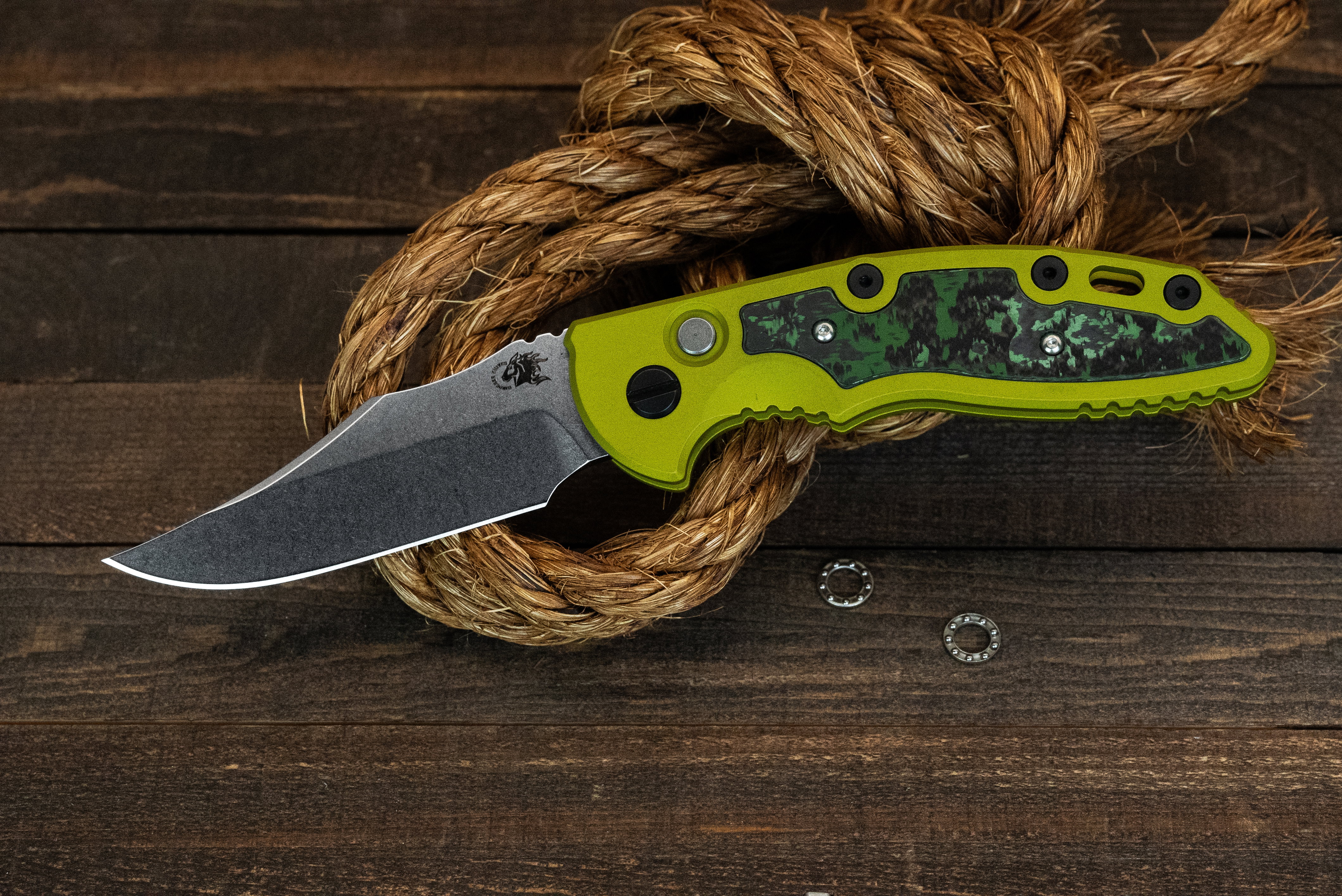
Hinderer Automatic Knives Gen 2: Tri-Way System & New Website Launch
Hinderer automatic knives are entering a new generation with the introduction of the Gen 2 platform. Featuring a redesigned button lock automatic mechanism and the addition of the Tri-Way Pivot System, this update brings new levels of performance and customization to USA made automatic knives. Alongside the release, a dedicated website for Hinderer automatic knives is launching in the coming weeks, with more announcements to follow.
03/31/2026
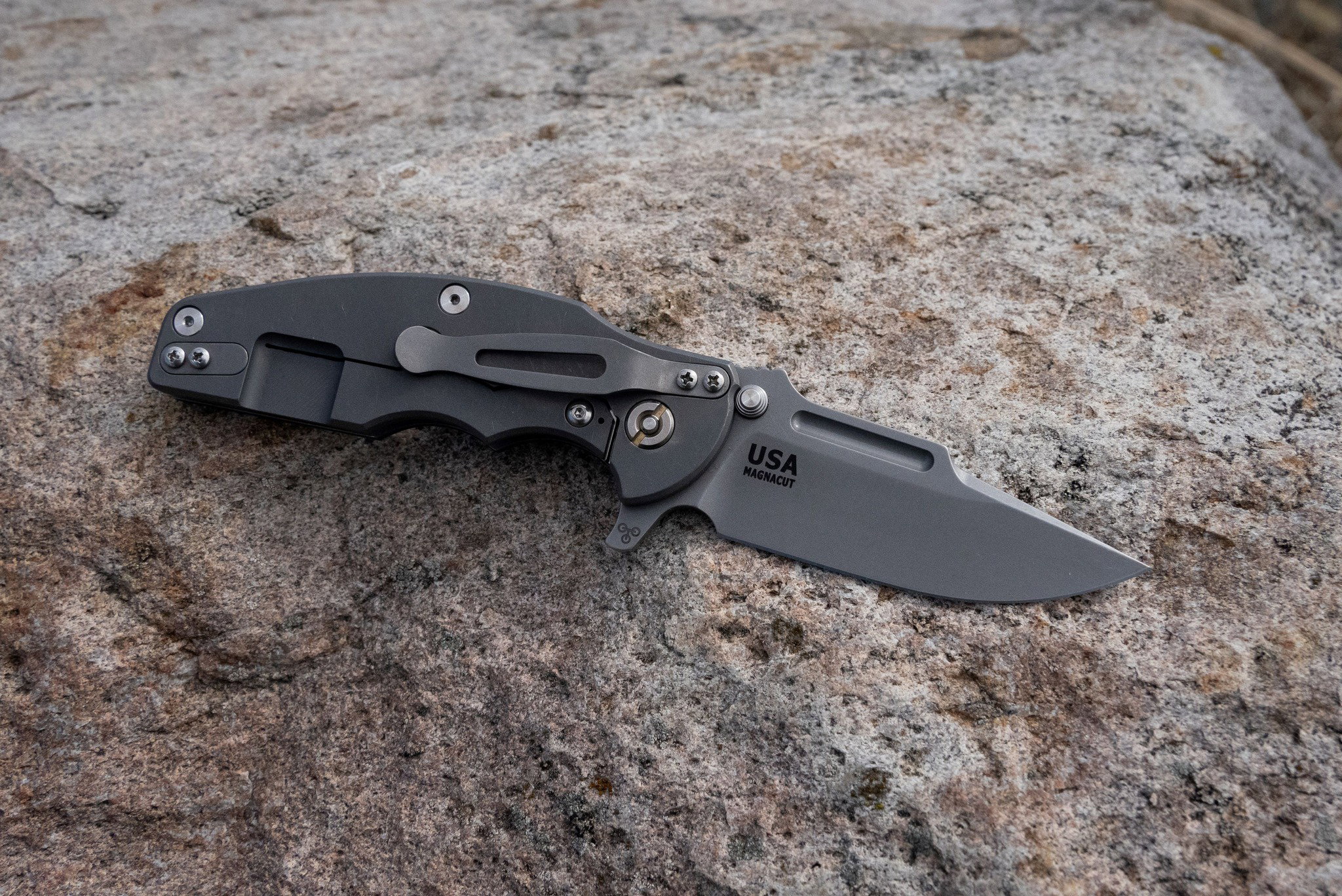
What Is a Bowie Knife? The Bowie Grind, History, and Modern Uses
From the American frontier to modern everyday carry, the Bowie knife has evolved through history while maintaining its signature clip point design and versatility.
03/31/2026
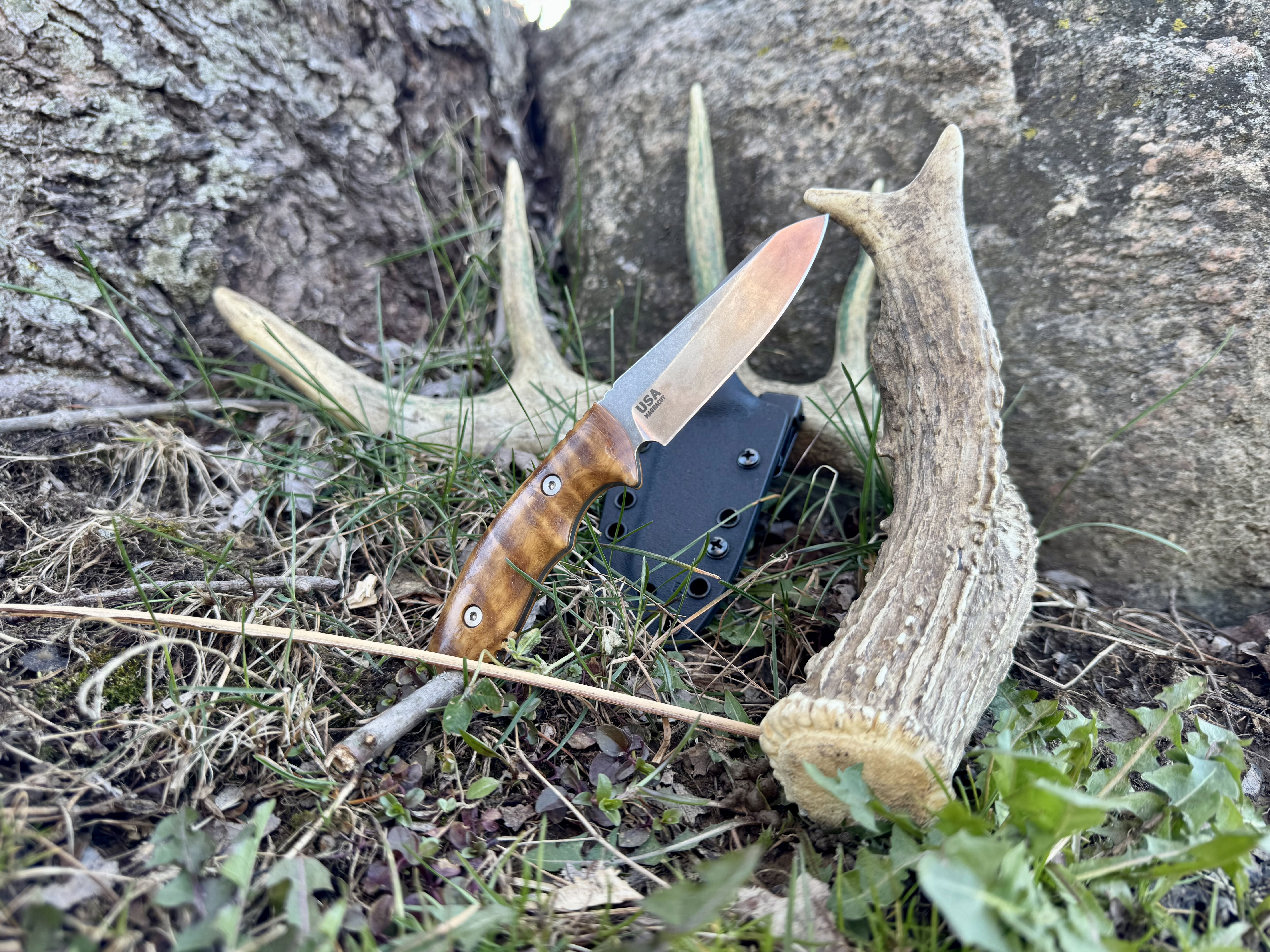
Shed Hunting Tips: Where to Find Deer Sheds This Season
Shed hunting is about putting in the miles, reading the land, and finding where deer have been. Learn how to locate sheds and make the most of your time in the field.
Live the Lifestyle
Subscribe to our lifestyle blog and be the first to receive latest articles, videos, how-to information and customer photos
From Frog Skin to Duck Camo: The History Behind Our Newest Finish
At Rick Hinderer Knives, we’ve always had an appreciation for history and the stories behind the things we create. Our newest camouflage finish brings together that history with a pattern many hunters will immediately recognize.
Today, most people know it as Duck Camo. But its story goes much further back.
The Origins of Frog Skin Camo
The pattern can trace its roots back to World War II and the fighting in the South Pacific.
As the need for camouflage uniforms grew, a horticulturist and garden editor for Better Homes and Gardens found inspiration in an unlikely place: the frogs in his garden.
He noticed how effectively their natural patterns allowed them to disappear among the surrounding foliage. That observation helped inspire a camouflage pattern designed to provide the same effect for Marines operating in the dense vegetation of the South Pacific.
The resulting camouflage became known as Frog Skin.
The uniforms featuring the pattern were even reversible, providing two different camouflage patterns that could be used depending on the environment.
From the South Pacific to the Duck Blind
After World War II, surplus military uniforms made their way into civilian hands.
Veterans who had seen firsthand how effectively the camouflage worked began putting those uniforms to use back home. One place where the pattern found a natural second life was in the duck blind.
Duck hunting was extremely popular, and the camouflage that had once helped Marines blend into the vegetation of the South Pacific worked just as well for hunters trying to disappear into marshes and wetlands.
As hunting clothing manufacturers began adopting similar patterns, Frog Skin became increasingly associated with waterfowl hunting.
Over time, it became what many of us now simply recognize as Duck Camo.
Bringing Frog Camo to the Ranch
Fast forward to today.
While developing new patterns and finishes here at Rick Hinderer Knives, Frog Skin stood out as something that had both a distinctive look and a history worth sharing.
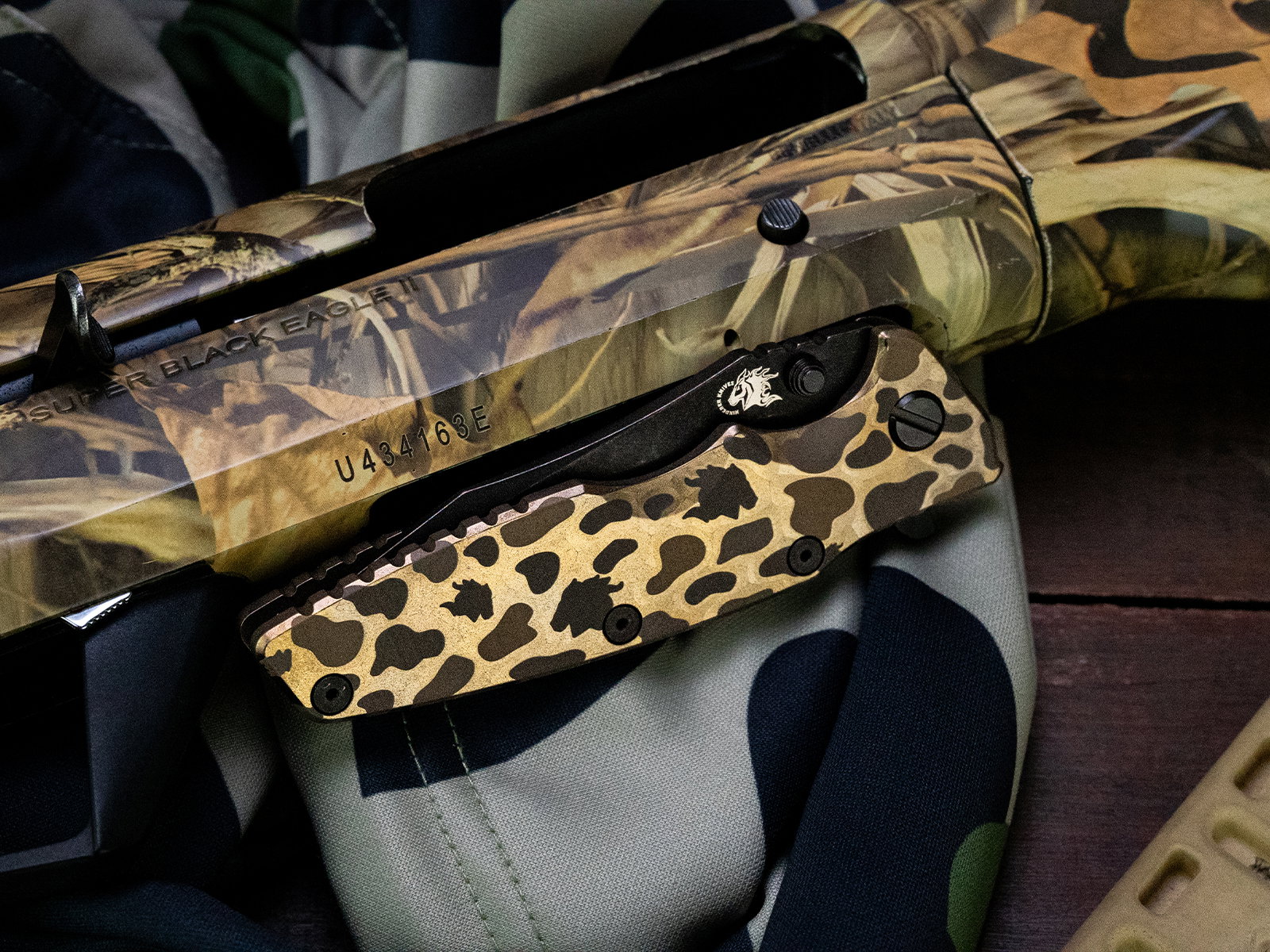
Using our laser, we were able to recreate the recognizable camouflage pattern directly on the knife while putting our own RHK touch on the design.
Look closely at the pattern and you’ll find something else hidden among the camouflage: our Horse Head logo.
The Horse Heads are worked directly into the Frog Camo pattern, blending into the design in much the same way the camouflage itself was originally intended to disappear into its surroundings.
A Historic Pattern, Reimagined
What started as Frog Skin camouflage during World War II eventually found a second life with generations of hunters and became the Duck Camo pattern recognized today.
Now, that history has made its way to The Ranch.
The Frog Camo Eklipse Spearpoints bring that unmistakable pattern to one of our knives with a uniquely RHK detail hidden throughout.
Read full video script ▾
Hey everybody. Rick here and I have a really exciting announcement to make. This is actually not a new knife or a new model. It’s a new finish that we came up with here at Rick Hinderer Knives. And, as always with me and our knives, we like to throw in some history. Let me explain first what the finish is. It’s a laser finish, and it’s a camouflage finish. A lot of you have probably seen this camouflage pattern before. It’s on our Eklipse, and many of you have probably recognized it. Nowadays, it’s commonly called Duck Camo, but it actually has some really historic roots. Tim and Brandon are our resident hunters here at Rick Hinderer Knives, and Tim was telling us about this Duck Camo. I had seen it before, but I really didn’t realize just how popular and mainstream it had become in everything from shoes to hunting supplies and plenty of other products. What’s really cool is the fact that this pattern has historical roots that go all the way back to World War II. You’re probably wondering how a camouflage pattern that you see today could go all the way back to World War II. During the South Pacific theater, General Douglas MacArthur wanted camouflage uniforms for Marines going into the South Pacific. An enterprising young man who was a horticulturist and also the garden editor for Better Homes and Gardens found inspiration while looking at frogs in his garden. He noticed how the pattern on the frogs helped them disappear into the surrounding foliage. If it worked for the frogs, why not use the same idea to help Marines blend into the jungles and foliage of the South Pacific? That observation helped inspire the camouflage pattern that became known as Frog Skin. The uniforms using the pattern were reversible and featured two different camouflage patterns, which was pretty advanced for the time. After the war, many of those uniforms were sold as military surplus. The guys who had served overseas knew how well the camouflage worked, and some of them started using those old uniforms for duck hunting. Duck hunting was extremely popular, and hunting clothing manufacturers eventually began using similar patterns. That’s how Frog Skin gradually became associated with what many people today call Duck Camo. So Duck Camo originally came from Frog Skin, and those two names have become closely connected over the years. Fast forward to today. Here at Rick Hinderer Knives, we were working on some new patterns that we could put on our knives, and the laser ended up being the best way to create this particular pattern. As you’ll see in the photos, the different tones and shapes in the laser work recreate the Frog Skin camouflage pattern. Brian also added something really neat when he was working on the laser files. If you look closely at the camouflage, you’ll see our Horse Head logo intermingled throughout the pattern. When I first looked at it, I actually had to verify that the Horse Heads were really in there. They blend right into the camouflage pattern, which makes it a really cool RHK detail. So that’s the story behind our Frog Skin Duck Camo pattern. You’ll be seeing this finish on different models coming out here at Rick Hinderer Knives. I’m really excited to share it with you guys. As always, thanks a bunch for the support, and we’ll see you next time.
Frog Skin Camo FAQ
What is Frog Skin camouflage?
Frog Skin is a historic camouflage pattern with roots dating back to World War II. Its design was inspired by the natural camouflage found on frogs and was developed to help troops blend into dense foliage.
Is Frog Skin Camo the same as Duck Camo?
The two names are closely connected. Frog Skin originated as a military camouflage pattern during World War II. After the war, surplus camouflage clothing became popular with duck hunters, helping the pattern become widely known as Duck Camo.
Where did Frog Skin camouflage originate?
Frog Skin camouflage traces its roots to World War II and the South Pacific. The pattern was inspired by the way frogs naturally blend into foliage and was developed for camouflage uniforms used in heavily vegetated environments.
How did Frog Skin become popular with duck hunters?
After World War II, surplus camouflage uniforms became available to civilians. Veterans and hunters recognized how effectively the pattern blended into natural surroundings and began using it for duck hunting. Hunting clothing manufacturers later adopted similar camouflage patterns.
How is Frog Skin Camo applied to Rick Hinderer Knives?
Rick Hinderer Knives recreates the Frog Skin-inspired pattern using laser work. The laser produces the different shapes and tones of the camouflage directly on the knife.
What makes the RHK Frog Camo pattern unique?
Along with the historic camouflage-inspired pattern, the RHK version includes Horse Head logos hidden throughout the design. The Horse Heads blend into the camouflage and add a uniquely Rick Hinderer Knives detail to the finish.